André Seznec Receives the 2025 ACM-IEEE CS Eckert-Mauchly Award This prize is in recognition of his work and for his extensive impact on computing, most notably pioneering contributions to branch prediction and cache memories. Seznec’s inventions can be found in billions of CPUs worldwide. These include the TAGE branch predictor and skewed-associative cache. In fact, Seznec’s work has served as a [..]
Award & nomination
Award & nomination
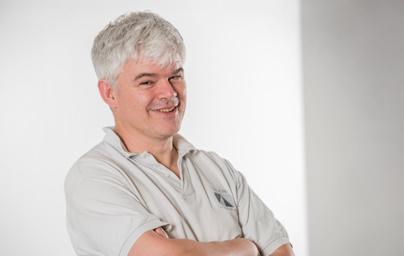
ACM and IEEE Computer Society named André Seznec as the recipient of the ACM-IEEE CS Eckert-Mauchly Award.
Submitted on 19/06/2025
Award & nomination
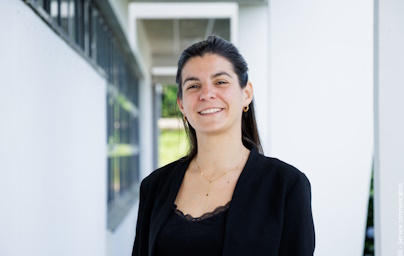
Charlotte Pelletier appointed to the IUF
Charlotte Pelletier, associate professor in computer science at UBS's Faculty of Engineering Sciences and member of the OBELIX research team, has just been named a junior member of the Institut Universitaire de France's Fundamental Chair. A prestigious distinction and a boost for her research. His current field of study? The Brazilian Amazon rainforest. But from above. From very, very high up. A [..]
Submitted on 17/06/2025
Award & nomination
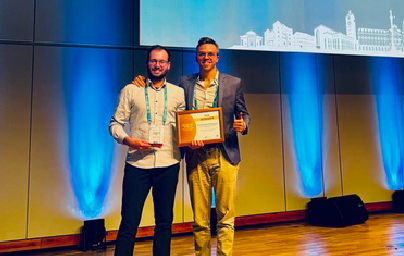
Congratulations to Maximilian Mehl, PhD student in the Rainbow research team, for his Best Paper Award
Congratulations to Maximilian Mehl Congratulations to Maximilian Mehl , Inria PhD in the Rainbow research team, who has received the Best Paper Award in the AI & Robotics track at the European Robotics Forum (ERF) 2025, held in Stuttgart 20 25-27 of march. for the paper entitled ‘ Model-Based Reinforcement Learning for Robust End-to-End UAV Control from Simulation to Real System Application’ by [..]
Submitted on 14/04/2025
Award & nomination
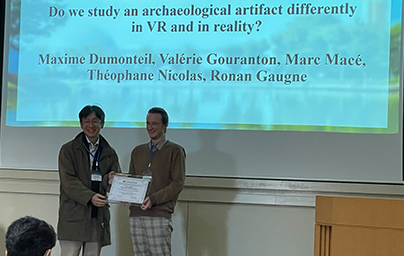
"Best paper honorable" for Seamless team (ex-Hybrid)
Do we study an archaeological artifact differently in VR and in reality? The work carried out as part of Maxime Dumonteil's thesis in the HYBRID team - in collaboration with the archaeology laboratory of the Université Paris I Panthéon Sorbonne, Trajectoires - studies the differences in behavior when carrying out a task in archaeology, between real and virtual environments. Experimentation carried [..]
Submitted on 11/12/2024
Award & nomination

Anne-Cécile Orgerie: the digital challenge to save energy
Anne-Cécile Orgerie: the digital challenge to save energy (in french only) Quelle est l’empreinte environnementale du numérique et comment la réduire ? Ces questions sont au cœur des travaux d’Anne-Cécile Orgerie, directrice de recherche CNRS à l'IRISA (Institut de recherche en informatique et systèmes aléatoires - CNRS/Université de Rennes). Ses contributions lui valent de recevoir le Prix [..]
Submitted on 28/11/2024
Award & nomination
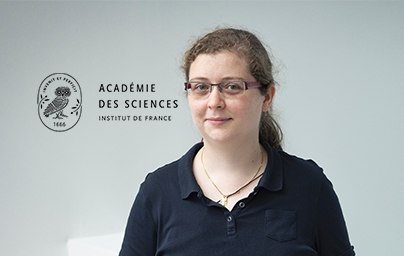
Anne-Cécile Orgerie wins the 2024 Academy of Sciences prize
Congratulations to Anne-Cécile Orgerie, winner of the Lovelace-Babbage prize awarded by the Académie des Sciences, in partnership with the Société Informatique de France. Anne-Cécile Orgerie, a CNRS researcher and member of the Magellan team, is studying the environmental impact of distributed systems, the large digital infrastructures that process, store and share information via the Internet [..]
Submitted on 28/11/2024
Award & nomination

Congratulations to Elisa Fromont, winner of the ‘Digital - electronics, photonics, AI and cyber’ prize, Valorisation 2024 Awards
Détecter les pannes sur une voiture ou sur une chaîne de production et savoir comment agir pour ne plus en avoir ? C’est le défi que cherche à relever cette thèse Cifre 1 encadrée par Élisa Fromont, professeure à l'Université de Rennes et membre de l'équipe de recherche Lacodam, réalisée en collaboration avec Stellantis (anciennement Groupe PSA). Élisa Fromont a encadré 12 thèses Cifre depuis 2011 [..]
Submitted on 25/11/2024
Award & nomination

Second award for Iris de Gélis' thesis (Obélix)
In April 2023, Iris de Gélis was awarded the special mention of the AFRIF 2023 (Association Française pour la Reconnaissance et l'Interprétation des Formes) thesis prize - see IRISA news. His thesis, Deep learning for change detection in 3D point clouds, has once again been recognized for its quality and scientific impact by the GdR CNRS MAGIS (see below). His dual axis in computer science and [..]
Submitted on 15/11/2024