
As part as its 50th anniversary celebrations, IRISA will be welcoming computer research experts throughout 2025 as part of its “guests of the month” series.
On Monday, June 30, Prof. David Bol (ECS group, ICTEAM Institute, UCLouvain, Belgium) will present a talk about the growing carbon footprint of generative AI services.
Monday, June 30, 2025
10:00 ⭢ 11:30
Inria Conference center
This talk is open to a non-specialist audience
|
|
The growing carbon footprint of generative AI services
Over the last two decades, we have acknowledged the rise of AI algorithms starting from recommendation systems to speech and face recognition to the recent explosion of generative AI services for question answering, text writing as well as image and music generation. In parallel, most of Humanity has realized the magnitude of the environmental catastrophe it has caused, with climate change and five other of the nine planetary boundaries that are transgressed. These transgressions have led Humanity in the Anthropocene, i.e. out of the safe operating space, where we clearly see the effects of climate change, biodiversity loss and pollution.
AI services are part of the Information and Communication Technologies (ICTs) that contribute to the exceedance of these boundaries. In particular, the ICT sector was responsible of 2-4% of the global greenhouse gas (GHG) emissions in 2020. Since then, the GHG emissions (or carbon footprint) of the ICT sector has increased significantly with key datacenter operators such as Google and Microsoft reporting that the fast growth of the AI processing capacity has prevented them from reaching their climate targets. Indeed, their GHG emissions increase despite their investment in renewable electricity purchase. Therefore, voices across the world advocate for a responsible use of AI services for a few reasons including environmental ones.
In this talk, we will analyze the global warming contribution of the ICT sector and the impact that AI service emergence have on them. We will see why efficiency improvement is not enough to reach net-zero climate targets for the ICT sector, which calls for complementing it with a sufficiency mindset and alternative business models.
Prof. David Bol
ECS group, ICTEAM Institute, UCLouvain
More about David Bol:
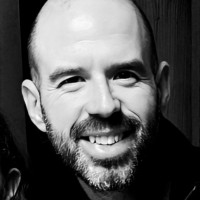 David Bol is a Professor at UCLouvain. He received the Ph.D degree in Engineering Science from UCLouvain in 2008 in the field of ultra-low power digital nanoelectronics. In 2005, he was a visiting Ph.D student at the CNM, Sevilla, Spain, and in 2009, a postdoctoral researcher at intoPIX, Louvain-la-Neuve, Belgium. In 2010, he was a visiting postdoctoral researcher at the UC Berkeley Lab for Manufacturing and Sustainability, Berkeley, CA. In 2015, he participated to the creation of e-peas semiconductors spin-off company, Louvain-la-Neuve, Belgium.
Prof. Bol leads the Electronic Circuits and Systems (ECS) group focused on ultra-low-power design of integrated circuits for environmental and biomedical IoT applications with a holistic focus on environmental sustainability. He is actively engaged in a social-ecological transition in the field of ICT research with a post-growth approach.
Prof. Bol has authored more than 150 papers and conference contributions and holds three delivered patents. He (co-)received four Best Paper/Poster/Design Awards in IEEE conferences and supervised the PhD thesis of Charlotte Frenkel who received the 2021 Nokia Bell Scientific Award and the 2021 IBM Innovation Award for her PhD.
On the private side, Prof. Bol pioneered the parental leave amongst male professors in his faculty, to spend time connecting to nature with his family in a post-growth deceleration.
This talk is part of IRISA's 50th anniversary celebrations.
More details about the program on the dedicated page of our website.
